
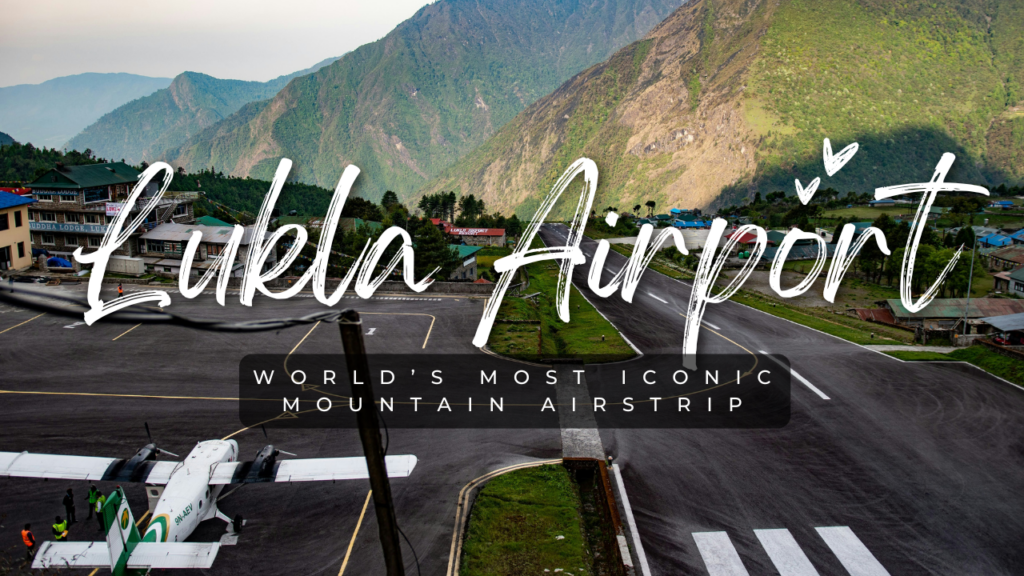
The first time you fly into Lukla, you don’t “arrive” so much as you get delivered—cleanly, confidently, and with your brain still catching up to what your eyes just saw. A strip of asphalt clinging to a mountainside. A valley that feels too narrow for an airplane. A runway that ends like a sentence cut short.
Lukla Airport has a reputation that travels faster than the planes that land there. Some people call it terrifying. Some call it overhyped. The truth is more interesting than both of them. Lukla is a place where aviation meets geography with zero small talk, and where smart decisions matter more than bravado.
Lukla 101: The Front Door to Everest
Lukla’s official name is Tenzing–Hillary Airport, a nod to the two names most associated with the modern Everest story. In practical terms, it’s the main gateway to Nepal’s Khumbu region, the launch point for the classic trek to Namche Bazaar, Everest Base Camp, and the big-name viewpoints that draw hikers from every continent.
If you’re trekking the “standard” Everest routes, Lukla isn’t optional. It’s the hinge your itinerary swings on. When it works, it feels like a cheat code: one short flight and you’re suddenly in the mountains. When it doesn’t, it teaches you the first lesson of high Himalaya travel—patience is not a mindset, it’s a schedule.
The Runway That Built the Legend
Lukla’s runway is short, steep, and unapologetically committed to its surroundings. It’s built on a slope, which changes everything. Planes land uphill to help them slow down. They take off downhill to help them build speed. This isn’t a gimmick. It’s physics doing the heavy lifting in a place where there’s no extra space to negotiate.
Then there’s the layout. One end of the runway faces a mountainside. The other drops away into open air. That contrast is why Lukla looks so dramatic in photos. It’s also why the airport demands precision. You don’t come here to wing it. You come here to do it right.
Approach and Departure: A Mountain-Valley Conversation
From a passenger seat, the approach into Lukla feels intimate. The valley wraps around you. The terrain looks close because it is close. You’ll likely notice the pilot make what feels like a committed, direct line toward the runway, with none of the lazy, wide loops you might associate with big airports.
This is also why Lukla is so sensitive to the weather. Mountains manufacture their own conditions. Clouds can drift in fast and sit in the valley like a lid. Winds can shift direction and strength with a personality of their own. Lukla is less about “bad weather” and more about “not the exact conditions required for safe flying right now.”
Why Mornings Matter
In Lukla, the best time to fly is usually early. Mornings tend to have calmer air and clearer visibility. As the day warms up, clouds and wind often become more unpredictable. That’s why flights are typically scheduled at the start of the day, and why delays later in the day can pile up quickly.
This is also why you’ll hear the same advice from everyone who’s done it: treat your Lukla flight day like a variable, not a fixed appointment. If your trek starts the day you land, you’re fine. If your international flight home is the day after your scheduled return, you’re gambling.
What Flies Into Lukla, and Why
The aircraft that serve Lukla are chosen for a reason. These are short-field workhorses built for high-altitude airports and tricky approaches. They’re not luxury cabins. They’re practical machines designed to do one job well.
That practicality shows up in baggage rules, too. Weight matters more here than most travelers expect. Sometimes your bag makes your flight. Sometimes it catches the next one. Sometimes it goes by helicopter. If you pack like someone who expects perfect logistics, Lukla will humble you. If you pack like someone who understands priorities, Lukla will reward you.
Booking Like a Pro, Not a Tourist
The easiest way to “win” Lukla is to plan for uncertainty rather than fight it. That means building buffer days into your itinerary, especially on the return. It means booking with flexibility. It means accepting that a cancellation isn’t a personal insult—it’s a safety decision.
It also means understanding how peak seasons work. In the busiest trekking months, flight demand surges, and operations can shift to reduce congestion around Kathmandu. That can add an extra layer to your travel day. If you’ve only read the brochure version of Everest Logistics, this is where reality shows up.
The Weather Reality Check
Let’s say it plainly. Lukla is not dangerous because it’s careless. It’s demanding because the environment is demanding. The most significant factor you’ll feel as a traveler isn’t fear. It’s a delay.
Low cloud is the classic spoiler. Visibility is everything. If the valley isn’t clear, flights don’t go. Wind and changing conditions can do the same. The result is a system that works beautifully when the window is open, and stops completely when it isn’t.
Your best strategy is simple. Assume delays are normal. Carry essentials with you. Keep your schedule roomy. And make peace with the idea that the Himalaya sets the pace.
Arrival: Touchdown to Trek Mode
When you land, you step off the plane, and you’re already in it. Lukla’s airport is small, busy, and full of motion—Trekkers re-lacing boots. Porters are organizing loads—guides scanning for clients. The transition from flight to trail happens fast.
This is where good organization pays off. Keep your important items with you. Know who you’re meeting and where you’re meeting them. Have cash sorted. The mountains are not the place to discover your banking plan was “figure it out later.”
Safety, Honestly
Lukla attracts sensational headlines, but the smarter conversation is about decision-making. This airport has tight margins, so operations lean heavily on strict rules. Flights only happen under conditions that meet requirements. Pilots operating here are trained for this environment. The system is built around discipline, not drama.
As a traveler, your job is to support that discipline. Don’t pressure staff for miracles. Don’t chase shortcuts. Don’t book itineraries that turn delays into emergencies. The safest Lukla traveler is the one who leaves room for the mountains to say “not today.”
When to Choose a Helicopter
Helicopters change the equation, but they don’t erase the weather. They can sometimes operate in conditions that ground small planes, and they offer flexibility—especially when you’re trying to connect back to the city. They also cost more, and availability can be competitive in peak season.
If your time is tight or you’re traveling with a group willing to split costs, a helicopter can be a practical plan. If your budget is tight and your schedule is flexible, fixed-wing flights make sense. The mistake is choosing the cheapest option while expecting the reliability of the most expensive one.
Alternatives to Flying: The Long Way In
If you want an adventure that starts before the mountains, you can trek in from lower trailheads and approach Lukla on foot. It takes longer, it’s tougher, and it changes the rhythm of your trip. For some travelers, that’s the point. It also gives you a backup plan when flights are stuck, and you’d rather move than wait.
Overland travel has improved in many parts of Nepal, but it’s still slow, and comfort is relative. Choose it because you want the journey, not because you assume it’s an easy workaround.
Lukla Playbook
Pack lighter than you think you need. Keep one set of essentials with you: a warm layer, a shell, snacks, water treatment, a power bank, a headlamp, and any medication you can’t replace easily. If your main bag gets delayed, you should still be able to function.
On the morning of the flight, eat small and simple. Pick a seat for what you value—views or calm—and then stop bargaining with your nerves. The quickest way through anxiety is to treat it like weather: acknowledge it, prepare for it, and don’t feed it.
And if delays happen, stay kind. Lukla is a pressure point for everyone involved. Being the calm person in the room isn’t just good manners. It’s a travel skill.
Photos and Stories Without Being “That” Person
Lukla is photogenic in the way only extreme geography can be. You’ll want the runway shot, the aircraft against the mountains, the moment the trail begins. Get them. But do it with awareness.
Don’t block the flow. Don’t wander into restricted spaces. Don’t treat the airport like a theme park. Lukla is a working place that locals rely on. The best content comes from respect anyway, because it forces you to look harder and tell a more actual story.
The Questions Everyone Asks
Is Lukla the most dangerous airport in the world? It’s more accurate to say it’s one of the most technical and unforgiving. The environment is the challenge. The operations are designed to meet that challenge with strict limits.
How often do flights get canceled? Often enough that you should plan for it. Build buffer days. Expect delays. Be pleasantly surprised when it runs smoothly.
Do you need special insurance? If you’re trekking in the Everest region, insurance that covers high-altitude trekking and emergency evacuation is worth serious attention.
Why Lukla Is More Than a Scary Runway
Lukla isn’t famous because it wants to be. It’s famous because it sits at a crossroads of ambition and reality. People come here chasing big mountains, big views, and big stories. Lukla is the first place the Himalaya asks, quietly, whether you’re ready to travel on its terms.
If you are, it’s not just a flight. It’s a threshold. And once you cross it, the rest of Nepal starts to feel bigger, wilder, and more alive.
If you want, tell me who your readers are—first-time trekkers, luxury Everest visitors, or aviation geeks—and I’ll tailor the tone, add a sample itinerary buffer plan, and include a short “what to pack for flight-day delays” section that fits your style.